


Table of contents
Why Choose Matlin Injury Law for Your Head-On Collision Case
When you’ve been injured in a head-on collision, you need an attorney who understands both the medical complexity of frontal impact injuries and the legal challenges these cases present. Matlin Injury Law brings years of experience handling catastrophic injury cases in Centennial and throughout Colorado.
We work on a contingency fee basis. You pay nothing upfront—we only recover a fee if we secure compensation for you. Our approach centers on personalized client support through every stage of your recovery, from initial investigation through settlement or trial. We combine thorough case investigation with compassionate client communication to help you manage this difficult time. Our Colorado car accident lawyers are committed to fighting for your rights.
What Is a Head-On Collision Claim?
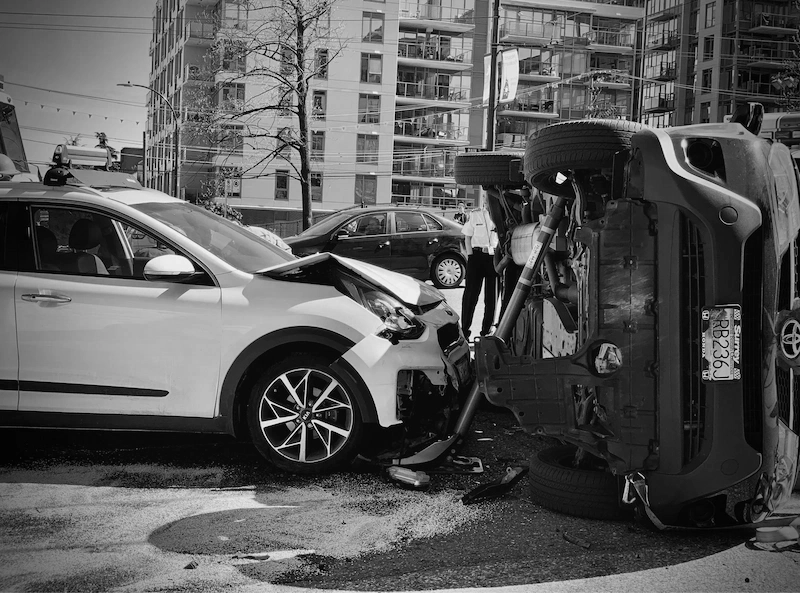
A head-on collision occurs when two vehicles traveling in opposite directions collide front-to-front. These accidents rank among the most dangerous on the road. The combined force of both vehicles’ speeds concentrates directly on the front of each vehicle, where occupants sit. Head-on collisions typically result in severe injuries for drivers, passengers, and sometimes pedestrians.
If you’ve been injured in a head-on collision, you may have a personal injury claim against the at-fault driver. This claim seeks compensation for your medical expenses, lost wages, pain and suffering, and other damages resulting from the accident. Head-on collision claims often involve significant injuries, substantial medical costs, and sometimes questions about shared fault or liability.
Common injuries from head-on collisions include traumatic brain injuries (TBI), spinal cord injuries, internal organ damage, severe fractures, and lacerations. These injuries often require emergency treatment, ongoing medical care, and long-term rehabilitation. Insurance companies understand the severity of these cases. They often employ aggressive tactics to minimize payouts. Having an experienced Centennial car accident attorney on your side protects your rights and ensures fair treatment.
How Head-On Collision Cases Are Handled
Handling a head-on collision case requires a systematic approach. We build a strong foundation for either settlement or trial. Our process begins with a thorough investigation of the accident scene. We obtain police reports, photograph the vehicles and roadway, identify and interview witnesses, and reconstruct the collision to establish how it occurred and who was responsible.
Medical evidence is critical in head-on collision cases. We gather emergency room records, hospital discharge summaries, ongoing treatment records, and specialist evaluations. We work with medical experts who can explain the severity of your injuries, the treatment you’ve received, and your long-term prognosis. This medical documentation forms the basis for calculating your damages. Understanding medical care and car accidents in Colorado helps us build stronger cases.
Liability determination involves applying Colorado negligence law to the facts of your case. We establish that the other driver owed you a duty of care. We show they breached that duty through negligent conduct. We demonstrate this breach caused injuries that resulted in measurable damages. We quantify both economic damages (medical bills, lost wages, future medical care) and non-economic damages (pain and suffering, emotional distress, loss of enjoyment of life).
Insurance negotiation follows our investigation and evidence gathering. We prepare a detailed demand letter explaining the facts, the law, and the damages you’ve suffered. We then negotiate with the insurance company, responding to their counteroffers and pushing back against unreasonable positions. Many cases settle during this phase when the insurance company recognizes the strength of your claim. Our team excels at dealing with insurance companies.
If settlement negotiations fail, we prepare your case for litigation. This includes filing a lawsuit, conducting discovery (exchanging information with the other side), taking depositions, and preparing for trial. We develop a trial strategy that presents your case compellingly to a jury. Throughout this process, we keep you informed and involved in all major decisions.
What Makes a Head-On Collision Claim Stronger
Several factors strengthen a head-on collision claim. Clear liability indicators include police report findings that identify the at-fault driver, traffic violations cited by the officer, and corroborating witness statements.
Strong medical documentation—including immediate emergency treatment, ongoing specialist care, diagnostic imaging, and expert medical testimony—establishes the severity of your injuries and their connection to the collision.
Economic damages improve with comprehensive documentation: medical bills, wage loss statements from your employer, receipts for medical equipment or home modifications, and expert testimony about future care costs. Non-economic damages are supported by your testimony about pain and suffering, family members’ observations of your changed quality of life, and expert testimony about the psychological impact of your injuries.
Catastrophic injury factors significantly strengthen claims. Permanent disability, disfigurement, loss of earning capacity, or loss of enjoyment of life justify substantial compensation. Insurance policy limits matter too—if the at-fault driver’s policy limits are low but your damages are high, underinsured motorist coverage on your own policy may provide additional recovery.
Get Help From Matlin Injury Law Today
Head-on collisions cause severe injuries that demand experienced legal representation. Insurance companies involved have substantial resources and will use aggressive tactics to minimize what they pay. You need an attorney who understands head-on collision cases, who will investigate thoroughly, and who will work for the compensation you deserve.
Matlin Injury Law is ready to help. We offer free consultations with no obligation, and we work on a contingency fee basis—you pay nothing unless we recover compensation for you. Contact us today to discuss your head-on collision case and learn how we can support your recovery.
Call Matlin Injury Law now at (303) 487-8911 for your free consultation.

FAQs
What causes head-on collisions in Centennial?

Head-on collisions in Centennial result from various causes, often involving driver error or negligence. Distracted driving—including texting, phone use, or adjusting vehicle controls—causes drivers to drift into oncoming traffic. Impaired driving from alcohol or drugs significantly increases the risk of head-on collisions. Speeding reduces a driver’s ability to react and avoid oncoming vehicles. Wrong-way entries onto highways or divided roads create immediate head-on collision hazards.
Weather conditions like snow, ice, or heavy rain can cause vehicles to lose control and cross into opposing lanes. Road hazards such as debris, potholes, or inadequate signage may also contribute to head-on collisions. Understanding these causes of car accidents is essential for establishing liability in your case.
Who is liable in a head-on collision?
Liability in a head-on collision depends on which driver’s negligence caused the accident. In many cases, one driver is clearly at fault—for example, a driver who crossed the center line while impaired or distracted. However, Colorado’s comparative negligence law allows for situations where both drivers share some responsibility.
If you were partially at fault, you can still recover compensation under Colorado law. Your award may be reduced by your percentage of fault. Additionally, liability may extend to third parties, such as a government entity responsible for road maintenance, a vehicle manufacturer if a defect contributed to the collision, or a business that served alcohol to an impaired driver. Understanding how fault is determined in a car accident is critical to your case.
Are head-on collisions always the other driver's fault?
Not necessarily. While many head-on collisions result from one driver’s clear negligence, some involve shared fault. For example, if you were speeding and the other driver was distracted, both of you may have contributed to the accident. Colorado’s comparative negligence law allows you to recover even if you were partially at fault, as long as you were not more than 50% responsible.
An experienced head-on collision attorney investigates all factors contributing to the collision. This investigation determines actual fault and protects your right to fair compensation. Learn more about what happens when a car accident was partially your fault.
What compensation can I recover from a head-on collision?
Head-on collision compensation includes both economic and non-economic damages. Economic damages cover quantifiable financial losses: all medical expenses from emergency care through ongoing treatment and rehabilitation, lost wages during your recovery, and future medical care costs if your injuries are permanent.
Non-economic damages compensate for pain and suffering, emotional distress, loss of enjoyment of life, and diminished quality of life. In cases involving permanent disability, disfigurement, loss of earning capacity, or loss of enjoyment of life, substantial compensation. If the collision resulted in a death, surviving family members may pursue a wrongful death claim. Learn more about types of damages in personal injury car accident claims.
How long does a head-on collision case take to resolve?
Most head-on collision cases settle within 6 to 18 months. Settlement timelines depend on the severity of injuries, the clarity of liability, and the insurance company’s willingness to negotiate fairly. Cases involving severe injuries typically require extended medical treatment until Maximum Medical Improvement (MMI) before settlement negotiations can be finalized.
If your case proceeds to litigation, most cases resolve within 12 to 18 months from filing to trial. This depends on case complexity and court schedules. Colorado courts aim to conclude 90% of civil cases within one year of filing under Chief Justice Directive 08-08. We work efficiently to resolve your case while ensuring we don’t accept inadequate settlement offers simply to close the file quickly.
What if the insurance company denies my claim?
Insurance companies sometimes deny head-on collision claims using various tactics: claiming you were partially at fault, arguing your injuries preexisted the accident, or disputing medical necessity. If your claim is denied, you have options.
We can appeal the denial, providing additional evidence and legal arguments. We can also pursue a bad-faith claim against the insurance company if they acted unreasonably. Ultimately, if the insurance company refuses fair settlement, we take your case to trial and let a jury decide. Learn how to challenge a bad-faith insurance claim.