


Table of contents
- Why Choose Matlin Injury Law After a Colorado Springs Truck Accident
- What Is Colorado’s Traction Law?
- What Is the Chain Law?
- Chain Rules for Commercial Trucks
- Common Winter Truck Crashes Around Colorado Springs
- How a Traction or Chain Law Violation Can Affect Fault
- Evidence in a Winter Truck Crash
- Frequently Asked Questions
- Contact Matlin Injury Law After a Winter Truck Accident in Colorado Springs
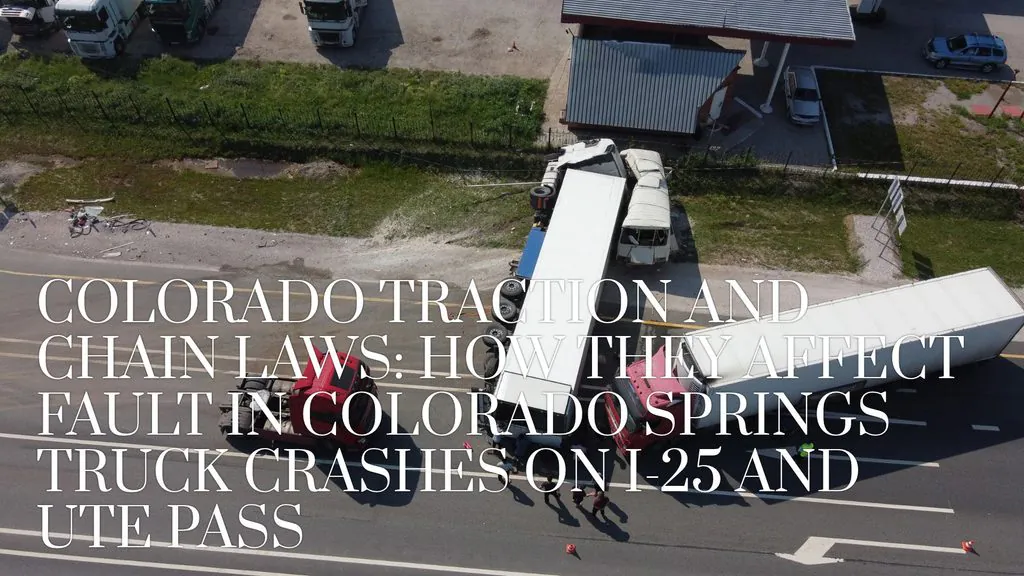
Winter storms can change driving conditions around Colorado Springs in minutes. I-25 north toward Monument and US-24 through Ute Pass both carry heavy truck traffic, and both can turn icy or snow-packed fast. When that happens, the Colorado Department of Transportation (CDOT) can activate the traction law or the chain law, and drivers who don’t comply can make a dangerous road even worse.
This article explains what Colorado’s traction and chain laws require, how they apply to commercial trucks, and how a violation can affect fault after a crash. If you were hurt in a winter truck accident around Colorado Springs, Matlin Injury Law can help.
Why Choose Matlin Injury Law After a Colorado Springs Truck Accident
Truck crash claims involve federal safety rules, trucking company records, and insurance companies that move quickly to limit what they pay. Matlin Injury Law helps injured people across Colorado Springs understand who may be responsible and preserve the evidence that matters. Learn more about our Colorado Springs truck accident lawyers. Consultations are free.
What Is Colorado’s Traction Law?
Under C.R.S. 42-4-106(5), CDOT may restrict travel on a state highway during icy or snow-packed conditions unless vehicles have the right traction equipment. CDOT says it can implement traction and chain laws on any state highway, and drivers are alerted through highway signs, COtrip.org, and road condition alerts.
When the passenger vehicle traction law is active, CDOT says passenger vehicles need either:
- Tires with at least 3/16-inch tread that are winter tires or rated all-weather, marked with a mountain-snowflake icon, M+S, or M/S, or
- Chains or a CDOT-approved alternative traction device.
On I-70 between Dotsero and Morrison, the traction law is in effect by statute from September 1 through May 31 every year. Elsewhere, including around Colorado Springs, it applies when CDOT activates it and posts signs.
What Is the Chain Law?
The chain law is a stricter step that CDOT uses during severe storms. CDOT describes the passenger vehicle chain law as the final safety measure before a highway is closed. When it is in effect, every vehicle must have chains or an approved alternative traction device.
Chain Rules for Commercial Trucks
Commercial vehicles have their own requirements. Under C.R.S. 42-4-106(5), when chains are required, the driver of a commercial vehicle with four or more drive wheels must put chains on at least four drive wheel tires. Colorado law also sets enhanced penalties for commercial drivers who violate these restrictions, with higher penalties when a violation causes a travel lane to close.
Federal rules add another layer. FMCSA regulation 49 CFR 392.14 requires commercial drivers to use extreme caution in hazardous conditions such as snow and ice, to reduce speed, and to stop driving if conditions become too dangerous.
Common Winter Truck Crashes Around Colorado Springs
Large trucks need much more distance to stop than passenger cars, and that gap grows on snow and ice. Winter truck crashes often involve:
- Jackknifes, when a trailer swings out after the driver brakes hard on a slick surface.
- Loss of control on grades and curves, such as the climbs and descents on US-24 through Ute Pass.
- Rear-end collisions, when a truck follows too closely to stop for slowing traffic.
- Stuck or spun-out trucks that block lanes and cause secondary crashes.
- Crashes near chain-up areas, where trucks slow down or pull over to install chains.
How a Traction or Chain Law Violation Can Affect Fault
A traction or chain law violation does not decide a crash claim on its own, but it can be strong evidence. Fault after a winter truck crash often turns on questions like:
- Was a traction or chain law active, and were signs posted?
- Did the truck have chains on, or carry the required equipment?
- Was the driver going too fast for conditions? Colorado law requires drivers to slow down from an otherwise lawful speed when weather or road conditions create a hazard (C.R.S. 42-4-1101).
- Did the trucking company pressure the driver to keep moving in a storm?
Colorado uses modified comparative negligence, so fault can be shared. A driver who ignored a chain law, or a trucking company that sent a truck out without proper equipment, may bear a large share of the responsibility.
Evidence in a Winter Truck Crash
Useful evidence can include CDOT and COtrip alerts showing when a traction or chain law was active, photos of the truck’s tires and equipment, dash cam footage, driver logs, and the trucking company’s dispatch records. Weather and road records can also help show what conditions drivers were facing. You can request the crash report as described in our guide to the Colorado Springs car accident report.
Frequently Asked Questions
Does the traction law apply on I-25 in Colorado Springs?
CDOT can implement the traction law on any state highway when conditions require it. When it is active, signs and COtrip alerts will say so.
What if the truck that hit me didn’t have chains on?
If a chain law was in effect, that may be important evidence of fault. A lawyer can help confirm what restrictions were active and what equipment the truck had.
Can I still recover if roads were icy and the crash wasn’t intentional?
Bad weather does not excuse unsafe driving. Drivers must adjust their speed and equipment to the conditions. Our FAQ on snow-related accidents covers more winter driving issues.
Contact Matlin Injury Law After a Winter Truck Accident in Colorado Springs
If you were injured in a truck crash on I-25, US-24, or another Colorado Springs road this winter, Matlin Injury Law can help you understand who may be responsible. Call 303-HURT-911 or contact us online for a free consultation.