


Table of contents

Determining responsibility after a car accident or personal injury is rarely a simple, one-sided equation. In many traffic collisions, both parties may have contributed to the crash. For example, one driver might have run a red light, but the other driver was traveling slightly over the speed limit.
Facing accusations from an insurance company about contributing to your own injuries raises an important question. What is modified comparative negligence, and what happens when a car accident was partially your fault?
At Matlin Injury Law, our car accident lawyer team helps victims protect their rights when insurance adjusters try to shift the blame. Understanding how Colorado negligence law treats shared fault protects you from unfair barriers to the compensation you deserve.
Defining Modified Comparative Negligence
Modified comparative negligence is a legal system used to assign financial responsibility for an accident when more than one party is to blame. Under this rule, a victim can still seek compensation for their injuries even if their own actions contributed to the incident. However, their final financial recovery is reduced dynamically based on their exact percentage of fault.
States across the country handle shared fault in different ways:
- Contributory Negligence (The All-or-Nothing Rule): A handful of states bar victims from recovering any compensation if they hold even 1% of fault for the accident.
- Pure Comparative Negligence: States like California and New York allow victims to recover damages even when they bear 99% responsibility for the crash, though their payout reduces by 99%.
- Modified Comparative Negligence: Most states use this middle-ground system, including Colorado. It allows victims to recover compensation, but establishes a strict percentage threshold or “bar” that the victim’s fault must not cross.
Colorado Negligence Law: The 50% Bar Rule
In Colorado, modified comparative negligence is strictly codified under C.R.S. § 13-21-111. Colorado operates under the 50% bar rule, also known as the 51% bar rule.
The statute allows an injured plaintiff to recover damages only when their negligence does not exceed the defendant’s negligence. In plain terms, this sets a strict 50% threshold:
- If you are 49% or less at fault: You can legally recover damages from the other driver or property owner.
- If you are 50% or more at fault: Colorado law bars you from recovering any compensation whatsoever.
What Happens if a Car Accident Was Partially My Fault?
If a jury or insurance adjuster determines that you share a portion of the blame for a collision, the modified comparative negligence rule will directly impact your final check. Your exact percentage of fault reduces your total damages, including medical bills, lost wages, and pain and suffering.
A Real-World Example of Shared Fault Payouts:
Imagine you are driving through an intersection and another motorist turns left directly in front of you, causing a severe side-impact collision.
- The Total Damages: You suffer severe injuries, and your total calculated types of damages in personal injury car accident claims equal $100,000.
- The Fault Assessment: An investigation reveals that the left-turning driver failed to yield the right of way, making them primarily responsible. However, phone records or dashcam footage reveal that you were glancing down at a text message at the moment of the crash.
- The Percentage Split: The insurance adjusters or a jury determine that the left-turning driver is 80% at fault, but you are 20% at fault for distracted driving.
- The Final Calculation: Under C.R.S. § 13-21-111, your $100,000 award is reduced by your 20% share of blame. You will walk away with a final settlement or verdict of $80,000.
Flipping those calculations changes everything. If the jury assigned you 51% of the blame for traveling at double the speed limit, your entire claim fails and you receive nothing.
How Insurance Companies Weaponize Comparative Fault
Reaching or exceeding the 50% fault threshold completely eliminates an insurance company’s obligation to pay. This gives adjusters a strong incentive to shift blame onto you. They employ aggressive defense tactics designed to artificially inflate your share of fault, including:
- Twisting Your Words: Adjusters may call you shortly after a crash, acting sympathetic, and ask for a recorded statement. A simple, polite phrase like “I’m so sorry, I didn’t see them coming until the last second” can become an admission that you failed to maintain a proper lookout.
- Delaying Investigations: Insurers may stretch out their “investigation” into a rideshare accident claim or a standard auto crash, hoping that physical evidence disappears and witness memories fade, making it harder for you to disprove their version of fault.
- Low-Ball Early Offers: Insurers may offer a quick, minimal settlement before your full medical bills are known. They may also hint that refusing the offer means a complete denial based on comparative negligence.
Proving You are Under the 50% Threshold
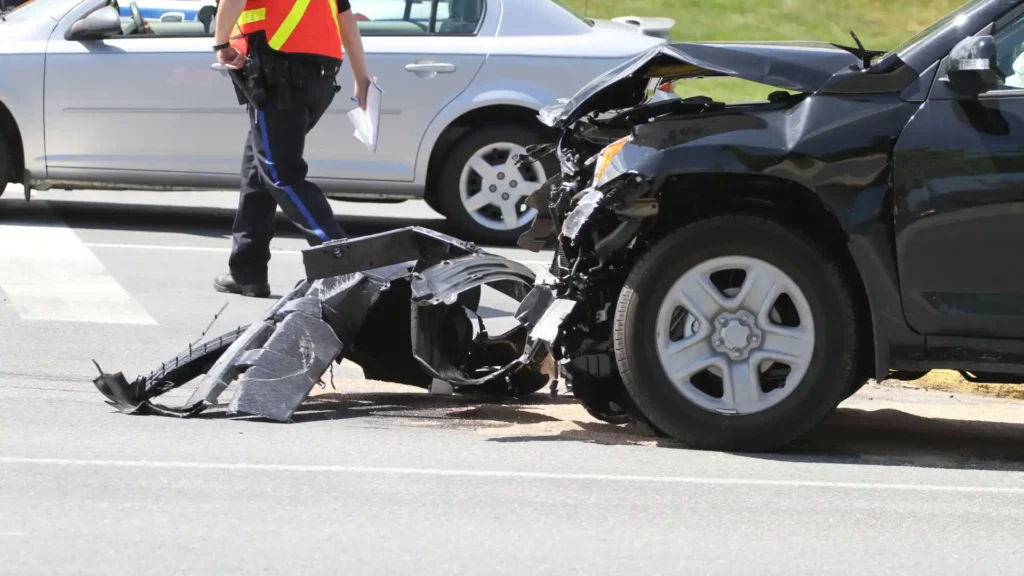
To fight back against these tactics and protect your settlement, you must present irrefutable evidence establishing the exact sequence of the accident. When you work with a personal injury lawyer, our team handles this investigation by gathering:
- Official Police Reports: Responding officers will note if citations were issued to the other driver for specific violations, such as failing to yield or running a stop sign.
- Video Footage: We subpoena nearby business security cameras, red-light cameras, or dashcam footage to show the precise speeds and timing of the vehicles.
- Accident Reconstruction Experts: In high-stakes cases involving catastrophic trauma, we work with forensic engineers who map out skid marks, vehicle crumple zones, and black box data to prove exactly how the collision occurred.
- Witness Testimony: Independent bystanders who have no financial stake in the outcome can provide the unbiased accounts needed to counter an insurer’s blame-shifting tactics.
Frequently Asked Questions
Can I still get my medical bills paid if I am partially at fault?
Yes. If you carry Medical Payments (MedPay) coverage on your Colorado auto policy, this benefit pays for your medical bills regardless of who caused the crash. Unlike a liability claim, MedPay covers your initial healthcare costs up to your policy limit (usually at least $5,000) even if you were 100% at fault.
Who determines the exact percentage of fault?
During negotiations, insurance adjusters on both sides argue over fault percentages based on available evidence. If negotiations fail and your case goes to trial, a Colorado judge or jury reviews all evidence and makes the final legally binding fault determination.
What happens if multiple drivers caused my accident?
Colorado utilizes a system of several liability. If three different drivers contributed to your pile-up crash, the jury will assign a percentage of fault to each driver. As long as your personal share of blame is under 50%, you can recover compensation from each at-fault driver based strictly on their individual percentage of responsibility.
Contact Matlin Injury Law Today
Understanding modified comparative negligence protects you from insurance company traps. If an insurer claims the accident was partially your fault, you should not navigate the complex legal landscape alone.
Matlin Injury Law was born and raised in Colorado and fights for clients like family. The firm handles all legal heavy lifting, builds an undeniable record of fault, and negotiates aggressively to secure the full, fair compensation you deserve.
Call our team today at (303) 487-8911 or contact us online for a free, no-obligation case evaluation.