


Table of contents
- Colorado Local and State Governments and Pothole Liability
- The 182-Day Notice of Claim Requirement
- Proving Negligence: The “Notice” Challenge
- Does Personal Insurance Cover Pothole Damage?
- Modified Comparative Negligence and Road Hazards
- What to Do After a Pothole Accident in Colorado
- Frequently Asked Questions
- Contact a Colorado Personal Injury Attorney
In Colorado, determining who pays for a pothole damage claim in Colorado depends on whether the government was negligent in its duty to maintain safe roadways. While it is legally possible to recover damages from a city, county, or the state, the process is governed by strict procedural rules and narrow exceptions to immunity laws.
A drive through the Rockies or a commute through the streets of Denver can be interrupted in an instant by the bone-jarring impact of a deep pothole. Beyond the immediate frustration, these road defects can cause thousands of dollars in repairs, leaving many drivers wondering if they must foot the bill themselves. At Matlin Injury Law, our Colorado car accident lawyer team understands that holding a government entity accountable for road maintenance is a complex legal challenge.
Colorado Local and State Governments and Pothole Liability
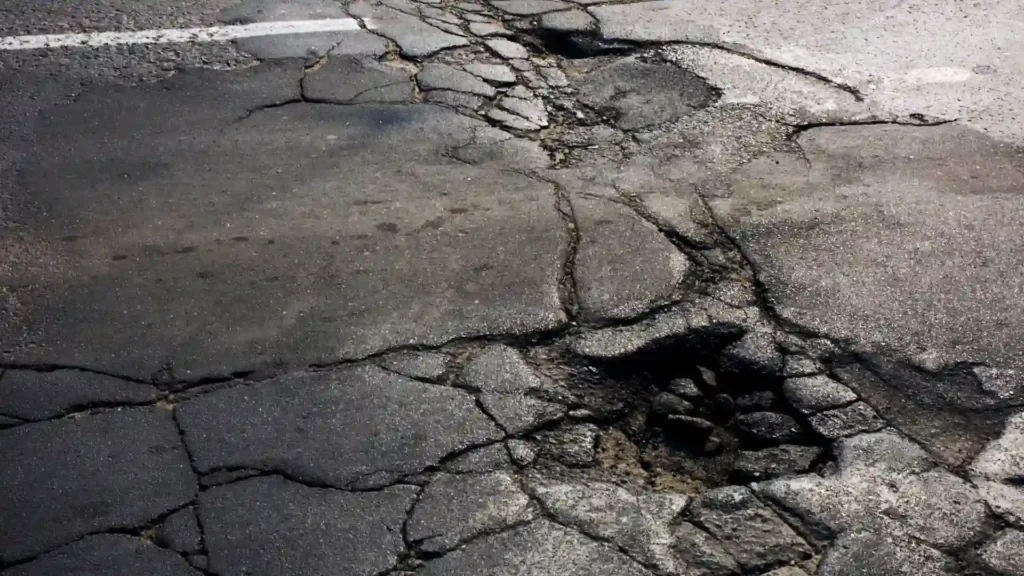
Under the Colorado Governmental Immunity Act (CGIA), public entities are generally immune from being sued. However, the state waives this immunity for certain “dangerous conditions” on public highways, roads, or streets. A pothole can qualify as a dangerous condition if it physically interferes with the movement of traffic on the paved portion of the road, or on the portion customarily used for travel if the road is unpaved.
To win a pothole damage claim in Colorado, you must prove that the government was negligent. This requires establishing key facts such as:
- The Entity Had Notice: The government must have had “actual or constructive notice” of the pothole. This means the agency either knew about the pothole because someone reported it. Or the pothole existed long enough that the agency should have found it through reasonable inspections and maintenance.
- Reasonable Time to Repair: The government must have had a reasonable time to fix the hazard after getting notice. It also must have failed to do so.
- Direct Cause of Damage: You must prove that the specific pothole directly caused your vehicle damage or your injuries.
The 182-Day Notice of Claim Requirement
The most critical hurdle in any claim against a Colorado government entity is the strict filing deadline. Under C.R.S. § 24-10-109, you must file a formal Notice of Claim within 182 days after discovering your injury or damage, regardless of whether you know all of the legal elements of your claim.
This notice is not a lawsuit. It is a required step that tells the government you plan to seek damages. You must send the notice the right way. Use registered or certified mail with return receipt requested. You can also use personal service.
Send it to the correct public entity or its attorney. For example, send it to the attorney general for claims against the state. For claims against a city, county, or CDOT, send it to the proper governing body. Must include the following:
- Your name and address, and your attorney’s contact information if you have one.
- A concise factual statement of the incident, including the exact date, time, place, and circumstances.
- The name and address of any public employees involved, if known.
- A concise statement of the nature and extent of the injuries or types of damages in personal injury car accident claims you are claiming.
- The specific amount of monetary compensation you are requesting.
Missing the 182-day deadline can bar your claim. The same is true if you send the notice to the wrong public entity or its attorney. If that happens, you can lose your right to compensation, even if you can prove negligence.
Proving Negligence: The “Notice” Challenge
Proving a city or state knew about a pothole is often the hardest part of a pothole damage claim in Colorado. Government agencies rarely pay these claims. News reports say that from 2022 to 2024, people filed over 1,300 pothole damage claims with the state. Only five of those claims received payouts.
To build your case, we investigate:
- Report History: Did other drivers report the pothole through a “311” system or the CDOT “Report a Pothole” portal?
- Repair Records: Did the city or CDOT attempt a temporary “patch job” that failed because it wasn’t a permanent fix?
- Maintenance Logs: Has the road been neglected or excluded from regular inspection schedules?
Our team can help you navigate the car accident claim process to gather the documentation necessary to challenge a government denial.
Does Personal Insurance Cover Pothole Damage?
If the government denies your claim—which, statistically, happens in the vast majority of cases—your own auto insurance may be your primary source of recovery.
- Comprehensive Coverage: Contrary to popular belief, hitting a pothole is usually not covered by comprehensive insurance. Insurers often treat it as a collision with the road. It is not seen as a non-collision event like hail, theft, or vandalism.
- Collision Coverage: This is the coverage that typically pays for pothole damage, minus your deductible. Insurers treat pothole impacts as collision losses because your vehicle struck an object in the roadway. However, insurance companies often view hitting a pothole as a single-vehicle collision, which could potentially impact your rates depending on the insurer’s underwriting guidelines.
- Rental Reimbursement: If your car is in the shop for extensive suspension or wheel repairs, you may wonder who pays for the rental car after an accident in Colorado. If you carry rental reimbursement coverage, your insurer will typically provide or reimburse a substitute vehicle while repairs are pending, up to the limits of that coverage.
Modified Comparative Negligence and Road Hazards
Colorado follows a modified comparative negligence rule. Under Colorado law, a driver’s recovery is reduced by their percentage of fault and is barred entirely if their negligence is equal to or greater than the combined negligence of the other parties—commonly described as a “50% bar.”
If the government can prove you were partially at fault—for instance, if you were speeding, following too closely, or were a distracted driving victim and did not see a visible hazard—your compensation can be reduced by your percentage of fault. If you are found to be 50% or more at fault for hitting the pothole, you may be legally barred from recovering any damages from the government entity. This is why immediate documentation of the road conditions, such as puddles disguising a deep hole or poor lighting, is essential.
What to Do After a Pothole Accident in Colorado
- Pull Over Safely: Do not stop in the lane of travel. Move to the shoulder and turn on your hazards.
- Take Photos: Capture the pothole’s size and depth (use an object like a coin or water bottle for scale) and the damage to your vehicle.
- Identify the Location: Note the exact street address, nearest cross-street, or mile marker so liability can be traced to the correct city, county, or CDOT.
- Get a Repair Estimate: Have a mechanic document the specific parts damaged (tires, rims, suspension, alignment) to link them directly to the impact.
- Report the Hazard: Even if you don’t file a claim immediately, reporting the pothole to 311 or CDOT helps establish “notice” for future incidents and may support other drivers’ claims.
Frequently Asked Questions
Are there limits on how much I can recover?
Yes. The CGIA sets a damages cap for claims against government entities. Colorado updates these caps from time to time. The limits apply per person and per incident, so state law can limit what you recover from a public entity. Talk with an attorney about the current cap amounts that may apply to your claim.
What if the pothole were in a private parking lot?
Government immunity does not apply to private property. These cases fall under premises liability law, and you would seek damages from the property owner or manager for failing to maintain the premises in a reasonably safe condition.
Can I sue the state for a pothole on I-70 or I-25?
Yes, but you must file your claim with the Colorado Department of Transportation (CDOT). You must also follow the CGIA rules, including the 182-day notice deadline. These claims are often hard to win. CDOT maintains thousands of miles of road. It may argue it did not get timely notice of the pothole. It may also claim it had a reasonable time to fix it.
Contact a Colorado Personal Injury Attorney
Navigating a pothole damage claim in Colorado requires more than just a repair bill; it requires a deep understanding of sovereign immunity and administrative law. If your pothole encounter resulted in a serious car accident in Colorado Springs or Denver, or if you sustained physical injuries, we are here to help.
Matlin Injury Law provides the aggressive advocacy needed to challenge government denials. We can help you determine fault in a car accident when road conditions are to blame.
Call our team today at (303) 487-8911 or contact us online for a free, no-obligation consultation.