


Table of contents
- Why Choose Matlin Injury Law After a Truck Accident Near Littleton
- What Is a Runaway Truck Ramp?
- Why Truck Brakes Fail on Mountain Grades
- Federal Rules Trucking Companies Must Follow
- Who May Be Liable When a Truck’s Brakes Fail?
- Why Evidence Must Be Preserved Quickly
- Frequently Asked Questions
- Contact Matlin Injury Law After a Truck Accident Near Littleton
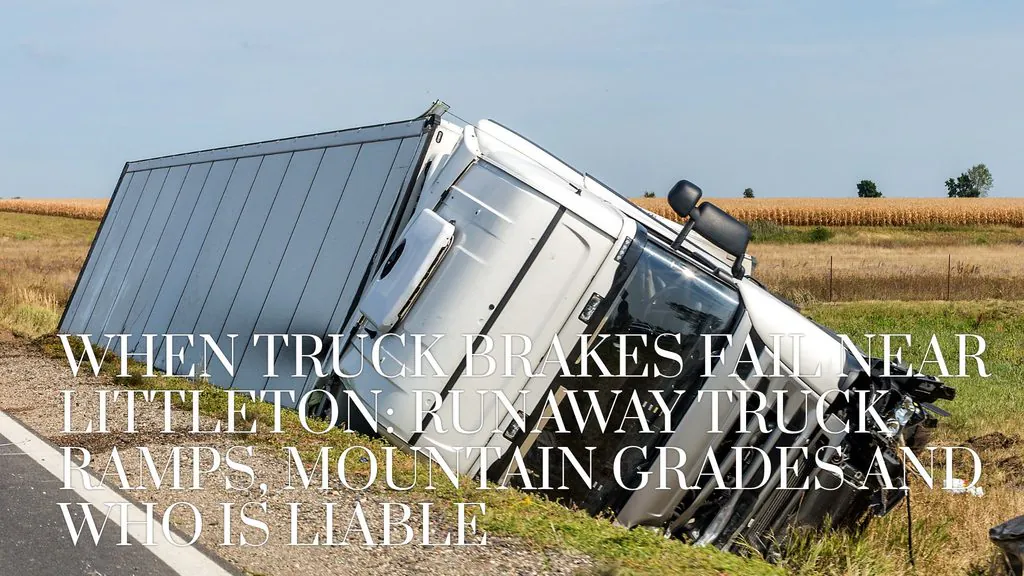
Littleton sits just below the foothills, and much of the heavy truck traffic coming down from Colorado’s mountain corridors ends up on roads that Littleton drivers use every day. Trucks coming off eastbound I-70 often continue onto C-470 toward the south metro, and US-285 carries traffic down from the foothills into the southwest metro. When a heavy truck’s brakes overheat or fail on a long descent, the results can be devastating.
This article explains how runaway truck ramps work, why brakes fail on mountain grades, and who may be held responsible when a truck with failed brakes causes a crash. If you were hurt in a truck accident near Littleton, Matlin Injury Law can help you understand your options.
Why Choose Matlin Injury Law After a Truck Accident Near Littleton
Truck accident claims often involve several companies, federal safety rules, and records that a trucking company controls. Matlin Injury Law helps injured people throughout the Denver metro, including Littleton, identify who may be responsible and preserve the evidence that matters. Learn more about our Littleton truck accident lawyers. Consultations are free.
What Is a Runaway Truck Ramp?
A runaway truck ramp, also called an emergency escape ramp, is a lane built off the side of a steep highway grade. It is usually filled with deep gravel or sand and often slopes uphill, so a truck that has lost its brakes can enter the ramp and slow to a stop without hitting other vehicles.
One of the best-known ramps in the Denver area is on eastbound I-70 at Mile Post 257, just east of Genesee, on the descent through Mount Vernon Canyon into the metro area. According to the Colorado Department of Transportation (CDOT), the ramp was rebuilt in a project that began in November 2023 to make it more visible and easier for drivers to use. The project included improved signs, more sight distance, larger barriers, and a pavement detection system that triggers flashing signs to alert speeding truck drivers to use the ramp.
Why Truck Brakes Fail on Mountain Grades
A loaded tractor-trailer can weigh many times more than a passenger car. On a long downhill grade, a driver who relies too heavily on the service brakes can overheat them. Hot brakes lose stopping power, a problem often called brake fade. Common contributing factors include:
- Speed and gear selection. Descending too fast or in too high a gear forces the driver to ride the brakes.
- Poor maintenance. Worn linings, out-of-adjustment brakes, or air system leaks reduce braking capacity.
- Overloaded or unbalanced cargo. Extra weight or a shifting load makes a truck harder to slow.
- Driver fatigue or inexperience. Mountain driving takes training and constant attention.
- Skipped brake checks or cooling stops. CDOT notes that there are brake cooling areas along the eastbound I-70 descent.
Federal Rules Trucking Companies Must Follow
Interstate trucking companies and drivers must follow Federal Motor Carrier Safety Administration (FMCSA) regulations. Rules in 49 CFR Part 393 set requirements for brake systems, and Part 396 requires motor carriers to systematically inspect, repair, and maintain their vehicles. Drivers must also complete inspection reports and confirm a truck is in safe operating condition before driving.
When a truck’s brakes fail, these records can be important evidence. Maintenance logs, inspection reports, and the truck’s electronic data may show whether a problem was known, ignored, or never checked.
Who May Be Liable When a Truck’s Brakes Fail?
A brake failure crash may involve more than one responsible party. Depending on the facts, liability may extend to:
- The truck driver, for speeding, poor gear selection, or failing to use an escape ramp or brake check area.
- The trucking company, for the driver’s conduct on the job, inadequate training, or poor maintenance practices.
- A maintenance or repair company that worked on the brakes.
- The company that loaded the cargo, if overloading or improper securing contributed.
- A parts manufacturer, if a defective brake component failed.
Our article on who is really at fault in semi-truck accidents explains more about how responsibility is shared, and our FAQ covers who is liable in a commercial truck accident.
Why Evidence Must Be Preserved Quickly
Trucking companies control much of the evidence in these cases, including driver logs, maintenance records, and electronic data from the truck. Some of it may not be kept forever. A lawyer can send a preservation letter asking the company to keep that evidence while the claim is investigated. If you can, also keep photos of the scene, the vehicles, and your injuries, along with witness contact information. Write down where the crash happened, including the nearest mile marker or exit, and anything you noticed about the truck before the crash, such as smoke from the wheels or a burning smell.
Frequently Asked Questions
Is a truck driver at fault if they had to use a runaway truck ramp?
Using a ramp can prevent a crash, and it is the right decision when brakes fail. Whether anyone is responsible for the brake problem depends on why it happened, such as poor maintenance or unsafe speed.
Can I sue the trucking company and not just the driver?
Often, yes. A trucking company may be responsible for its driver’s actions on the job and for its own maintenance and training practices.
How long do I have to file a truck accident claim in Colorado?
Deadlines apply. See our FAQ on the statute of limitations for truck accident claims and talk to a lawyer as soon as possible.
Contact Matlin Injury Law After a Truck Accident Near Littleton
If a truck with failed brakes or another trucking mistake caused your injuries, Matlin Injury Law can investigate what happened and identify who may be responsible. Call 303-HURT-911 or contact us online for a free consultation.