


Table of contents
- Colorado school-zone rules and driver responsibilities
- Reduced speed limits
- Traffic violations in designated school zones
- Pedestrian right-of-way
- School-bus stopping requirements
- Common school-zone hazards
- Determining liability after a school-zone crash
- Negligent drivers
- Commercial drivers and employers
- Public entities
- Comparative negligence
- Safety tips for Colorado Springs families
- For drivers
- For parents and students
- What to do after a school-zone accident
- Legal help for Colorado Springs families
Mornings and afternoons around Colorado Springs schools can bring heavier neighborhood traffic. School buses, parents dropping off students, children walking or biking, and crossing guards can create conditions that require drivers to stay alert and follow posted traffic controls.
A driver’s failure to slow down, yield when required, or comply with school-bus stopping laws can lead to serious injuries. Understanding Colorado school-zone rules, potential liability issues, and practical safety precautions can help families and motorists reduce risk after a crash.
Colorado school-zone rules and driver responsibilities
Colorado state and local road authorities may establish reduced speed limits in school areas when special hazards exist. Drivers should follow the posted speed limit and the effective times or conditions shown on official school-zone signs.
Reduced speed limits
School-zone speed limits are not universally set at 20 mph throughout Colorado.
Under C.R.S. § 42-4-1102, the Colorado Department of Transportation or a local authority may establish a reduced speed limit where special or temporary hazards exist. The statute generally does not allow a reduced speed limit lower than 20 mph on a state highway or arterial street, or lower than 15 mph on another road or street.
A school-zone speed limit applies when official signs indicate that it is in effect. Signs may identify particular hours, school days, flashing-beacon conditions, or other circumstances. Drivers should follow the posted limit and all traffic-control directions at the location.
Traffic violations in designated school zones
Colorado law includes provisions addressing traffic violations in designated school zones. Whether a particular violation carries enhanced consequences can depend on the statute involved, the location, the required signs, the timing of the violation, and the facts of the incident.
Drivers should not assume that every reduced-speed sign applies at all times. They should also not assume that the absence of children in immediate view removes the obligation to follow a posted school-zone control when it is active.
Pedestrian right-of-way
When traffic-control signals are not in place or are not operating, a driver must yield to a pedestrian crossing within a marked crosswalk or an unmarked crosswalk at an intersection.
Under C.R.S. § 42-4-802, drivers must slow down or stop as necessary to yield when a pedestrian is in the driver’s half of the roadway or is approaching closely enough from the opposite half to be in danger.
Drivers should not assume that a child has seen the vehicle or understands how quickly it is approaching. In school areas, children may enter a crosswalk unexpectedly or emerge from between parked vehicles.
School-bus stopping requirements
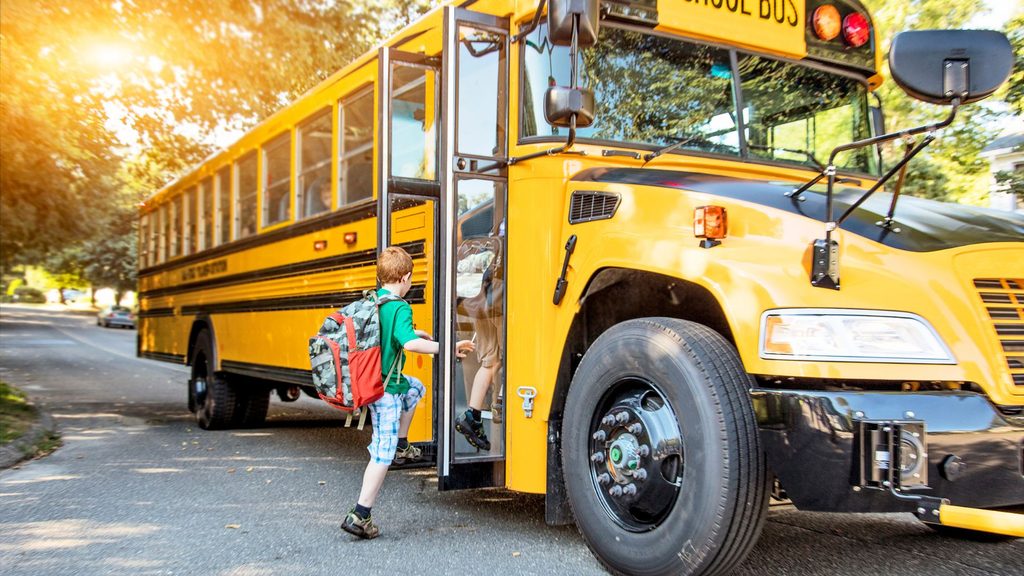
Colorado drivers approaching or overtaking a stopped school bus displaying flashing red lights must generally stop at least 20 feet before reaching the bus and remain stopped until the flashing red lights are no longer operating.
Traffic traveling behind a stopped school bus must stop. Traffic approaching from the opposite direction must also generally stop unless the roadways are separated by a raised or depressed median or another physical barrier. A painted line, center-turn lane, or painted median alone does not create this exception.
Drivers should also use caution after a school bus begins moving because children may still be near or crossing the roadway.
Common school-zone hazards
School areas can present risks even when drivers are traveling at the posted speed limit. Common contributing factors may include:
- Distracted driving, such as using a phone, adjusting navigation, or attending to passengers
- Speeding or failing to reduce speed when entering an active, posted school zone
- Failing to yield to pedestrians when required
- Failing to obey directions from crossing guards or other authorized traffic-control personnel
- Passing or failing to stop for a school bus displaying flashing red lights
- Limited visibility caused by sun glare, fog, snow, rain, ice, darkness, or parked vehicles
- Unsafe drop-off and pickup behavior, such as double parking, blocking crosswalks, stopping in travel lanes, making prohibited U-turns, or allowing children to exit into traffic
At 20 mph, a vehicle travels approximately 88 feet in three seconds. Even a brief lapse in attention can reduce the time and distance available to react.
Determining liability after a school-zone crash
Fault in a Colorado school-zone accident depends on the specific facts, available evidence, and whether each person involved acted with reasonable care under the circumstances.
Relevant circumstances may include:
- Posted signs and the applicable speed limit
- The time and whether school-zone controls were active
- Road, weather, lighting, and visibility conditions
- Whether a school bus was stopped with flashing red lights
- The presence and instructions of crossing guards
- Crosswalk markings, traffic signals, and other traffic-control devices
- The actions of drivers, pedestrians, bicyclists, and others involved
- Available photographs, video, witness statements, police reports, and vehicle data
Potentially responsible parties may include the following.
Negligent drivers
A driver may be responsible for a crash if evidence shows the driver exceeded the applicable speed limit, failed to yield when required, disregarded traffic-control devices, drove while distracted, violated the school-bus stopping law, or otherwise failed to use reasonable care under the circumstances.
A traffic citation may be relevant evidence, but it does not by itself determine civil liability.
Commercial drivers and employers
A delivery driver, rideshare driver, or other worker who causes a collision while performing job duties may create a claim against the driver. Depending on the facts and the employment or agency relationship, another party, such as an employer, may also be legally responsible.
These cases can involve additional issues, including company policies, commercial insurance coverage, vehicle ownership, dispatch records, and driver status.
Public entities
In limited circumstances, a claim may involve a city, county, school district, or another public entity. These claims can raise issues involving roadway maintenance, traffic-control devices, a school traffic plan, or other governmental functions.
Claims involving public entities or public employees may be subject to the Colorado Governmental Immunity Act. Government entities may have immunity unless a statutory waiver applies.
A person considering a claim against a public entity or public employee generally must provide written notice within 182 days after discovering the injury. The proper recipient can vary. For a claim involving the State of Colorado or a state employee, notice generally goes to the Attorney General. For a claim involving another public entity or employee, notice generally goes to the entity’s governing body or attorney.
These notice requirements are technical and can affect legal rights. Prompt legal review may be important when a school district, local government, or public employee could be involved.
Comparative negligence
Colorado follows a modified comparative negligence rule under C.R.S. § 13-21-111. An injured person’s damages may be reduced by their percentage of fault.
Recovery may be barred if the injured person’s negligence is equal to or greater than the combined negligence of the person or persons against whom recovery is sought. The application of this rule can depend on the parties, claims, evidence, and allocation of fault in the particular case.
Safety tips for Colorado Springs families
For drivers
- Put away mobile devices and set navigation before entering a school area
- Follow all posted school-zone speed limits and traffic-control signs
- Watch for children near crosswalks, parked vehicles, bus stops, and school entrances
- Obey crossing guards and other authorized traffic-control personnel
- Stop for a school bus displaying flashing red lights, as required by Colorado law
- Leave extra time for school drop-off and pickup periods
- Avoid stopping in crosswalks, blocking driveways, double parking, or making prohibited turns near school entrances
- Remain alert even after a school bus begins moving because children may still be near the roadway
For parents and students
- Use designated drop-off areas, crosswalks, and routes recommended by the school
- Do not drop children off across the street unless there is a safe and permitted place to cross
- Teach children to stop at the curb, look in all directions, and follow crossing-guard instructions
- Remind children that a vehicle may not stop simply because they are waiting at a crosswalk
- Encourage children to avoid distractions, including mobile devices or headphones, while crossing streets
- Follow the school’s traffic-flow plan and pickup and drop-off instructions
What to do after a school-zone accident
If you or your child is involved in a collision in or near a school zone, prioritize immediate safety and take reasonable steps to preserve information.
- Call 911 when emergency medical care, law-enforcement response, or other emergency assistance is needed.
- Seek prompt medical evaluation when appropriate, especially if a child was involved or anyone has pain, dizziness, confusion, loss of consciousness, or other possible injury symptoms. Some injuries may not be immediately apparent.
- If it is safe to do so, photograph vehicle positions, damage, crosswalk markings, traffic signs, signals, weather conditions, school-zone signs, bus activity, and the surrounding roadway.
- Exchange names, contact information, driver’s-license details, vehicle information, and insurance information with involved drivers when possible.
- Obtain names and contact information from witnesses, including crossing guards, school staff, or other adults who may have seen the collision.
- Notify school administration if the incident occurred on school property or involved a student, crossing guard, school bus, or school traffic-control plan.
- Preserve medical records, repair estimates, photographs, insurance communications, and the law-enforcement crash report or case number.
- Provide accurate factual information to police, emergency personnel, and insurers. Avoid guessing about what happened, speculating about fault, or making statements beyond what you personally observed.
Before giving a recorded statement or signing documents for an insurer, consider speaking with a Colorado Springs personal injury lawyer, particularly if the crash involved serious injuries, disputed fault, a child, a commercial driver, or a public entity.
Legal help for Colorado Springs families
A school-zone collision can leave a family dealing with medical concerns, missed work, insurance questions, and uncertainty about who may be responsible. Matlin Injury Law can review the circumstances of a crash, investigate potential sources of liability, and explain available legal options.
If you or a family member was injured in a school-zone collision, speaking with a Colorado Springs car accident lawyer can help you understand the facts of the case and possible next steps.
Contact Matlin Injury Law for a free, confidential consultation to discuss your situation.