


Table of contents
Car accidents happen quickly, leaving victims with injuries, property damage, and questions about what really occurred. In Littleton, Colorado, dash cam footage has become a powerful tool for establishing fault and strengthening personal injury claims. This technology provides objective evidence that can make the difference between a successful claim and a disputed case. If you’ve been injured in a car accident and have dash cam footage, Matlin Injury Law can help you understand how to use this evidence to recover the compensation you deserve.
Understanding Dash Cam Evidence in Colorado
Dash cam footage captures real-time video of traffic incidents, providing an unbiased account of events leading up to, during, and after a collision. Colorado courts recognize dash cam footage as admissible evidence when properly authenticated and relevant to the case. The Colorado Judicial Branch maintains standards for evidence presentation in state courts.
The Colorado Rules of Evidence govern the admissibility of dash cam footage. Under CRE 901, the footage must be authenticated by showing it accurately depicts what it purports to show. CRE 401 requires the evidence to be relevant, while CRE 403 allows courts to exclude evidence if its probative value is substantially outweighed by unfair prejudice or confusion. Understanding these legal standards is crucial when presenting evidence in your claim. An experienced Littleton attorney can guide you through the evidentiary requirements.
Legal Requirements for Dash Cams in Colorado
Colorado law permits the use of dash cams with specific restrictions. The state regulates dash cam placement to ensure driver safety and visibility. Unlike some states, Colorado does not explicitly prohibit dash cams, but vehicle and traffic regulations govern their installation.
Placement and windshield obstruction rules
Colorado limits windshield obstructions under C.R.S. § 42-4-227. This statute prohibits objects that obstruct the driver’s clear view of the highway. Dash cams must be positioned to avoid blocking the driver’s line of sight. The Colorado Department of Transportation enforces these regulations to maintain road safety.
Most dash cams mount behind the rearview mirror or in the lower corner of the windshield. These positions typically comply with Colorado’s obstruction laws while capturing clear footage of the road ahead. When you’re involved in a collision, proper dash cam placement can provide critical evidence that supports your claim.
Audio recording considerations
Colorado is a one-party consent state for audio recordings. C.R.S. §§ 18-9-303 and 18-9-304 govern audio recording laws. If your dash cam records audio inside the vehicle, you can legally record conversations where you are a participant. However, recording conversations between passengers without their knowledge may violate privacy laws. The Colorado Attorney General’s office provides guidance on recording consent requirements.
Many dash cam users disable audio recording to avoid potential legal complications while still capturing valuable video evidence. This approach protects your privacy while preserving the visual record of the accident.
How Dash Cam Footage Strengthens Your Claim
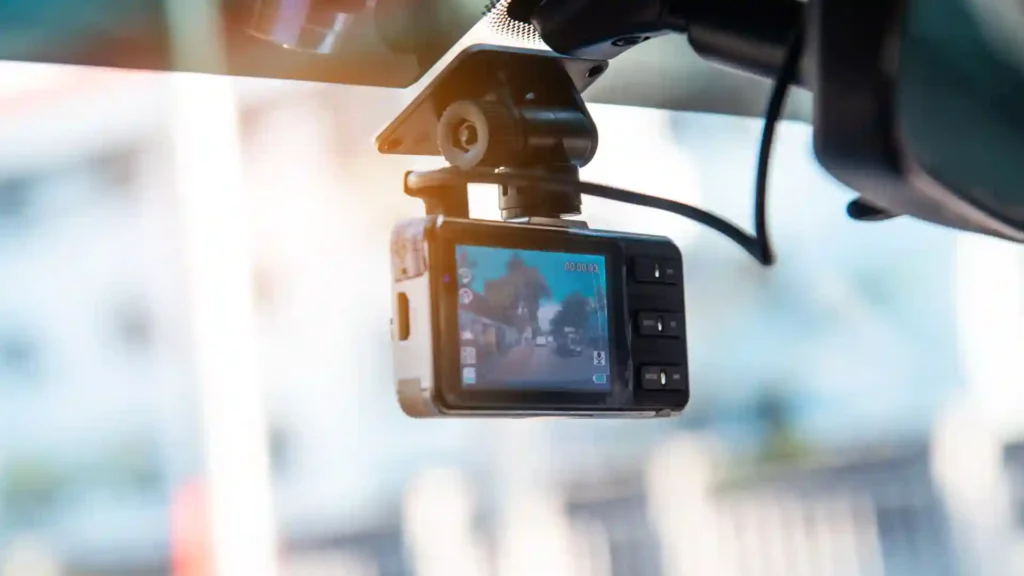
Dash cam footage provides several advantages in accident claims:
Objective documentation of events
Unlike witness testimony, which can be unreliable or biased, dash cam footage provides an objective record of the accident. The video shows exactly what happened, including:
- Traffic light colors and timing
- Vehicle speeds and positions
- Driver behaviors before impact
- Weather and road conditions
- The sequence of events leading to the collision
This documentation is particularly valuable when determining fault, as it eliminates disputes about what occurred.
Establishing fault and liability
Colorado follows a modified comparative negligence system. Under C.R.S. § 13-21-111, your compensation is reduced by your percentage of fault, and you cannot recover if you are 50% or more at fault. Dash cam footage can clearly establish the other driver’s negligence while demonstrating your adherence to traffic laws.
Common scenarios where dash cam footage proves fault include:
- Red light violations
- Failure to yield right-of-way
- Following too closely
- Improper lane changes
- Distracted driving behaviors
When you need to establish liability in your accident, dash cam evidence becomes invaluable in negotiations with insurance companies. This is why consulting with Matlin Injury Law early in the process strengthens your position.
Supporting witness testimony
Dash cam footage corroborates witness statements and fills gaps in testimony. Witnesses may miss crucial details or remember events differently. Video evidence provides a complete picture that supports credible witness accounts while exposing inconsistencies in false or mistaken testimony. This is particularly important when taking steps after a collision, as witness statements collected at the scene may later be contradicted by the other party.
Countering false claims
Insurance companies and opposing parties sometimes dispute fault or claim the accident occurred differently than reported. Dash cam footage prevents these tactics by providing indisputable evidence of what actually happened. This objective record protects your rights and ensures fair evaluation of your claim.
Working with Insurance Companies
Insurance adjusters value objective evidence when evaluating claims. Dash cam footage can expedite the claims process by clearly establishing fault and damages. However, insurance companies may still attempt to minimize payouts or dispute coverage. Understanding your rights as an accident victim is essential.
Providing footage to insurers
When submitting dash cam footage to insurance companies:
- Preserve the original file without editing
- Provide clear copies in standard formats
- Include timestamps and location data if available
- Document the chain of custody for the footage
Maintaining the integrity of your evidence strengthens your position during settlement negotiations. An experienced attorney can advise you on proper evidence handling and presentation.
Protecting your interests
While dash cam footage strengthens your position, insurance companies may still undervalue your claim. Consider consulting with Matlin Injury Law before accepting any settlement offers, especially if you suffered significant injuries or property damage. Understanding the types of damages in personal injury claims can help you evaluate whether a settlement is fair.
Many accident victims underestimate the value of their claims. Medical expenses, lost wages, pain and suffering, and future treatment costs should all factor into your settlement evaluation. This is why having professional legal representation matters.
Maximizing the Value of Your Dash Cam Evidence
To ensure your dash cam footage provides maximum benefit:
Proper installation and maintenance
Position the camera to capture the road ahead without obstructing your view. Regularly check that the camera is recording properly. Ensure adequate storage space and battery life. Clean the lens regularly for clear footage. Proper maintenance ensures your dash cam captures usable evidence if an accident occurs.
Immediate post-accident steps
After an accident:
- Secure the dash cam and memory card immediately
- Do not delete or edit any footage
- Make backup copies of the original files
- Document the camera’s settings and timestamp accuracy
Following these steps aligns with the essential actions to take after a collision. The sooner you preserve evidence, the stronger your claim becomes. Spoliation of evidence—intentionally destroying or altering evidence—can result in legal penalties and damage your case.
Legal considerations
Dash cam footage must be properly preserved and authenticated for court use. An experienced attorney can ensure the evidence meets legal standards and is presented effectively. This is why having professional representation review your evidence before settlement negotiations is critical. Your attorney can also identify additional evidence that strengthens your claim, such as police reports, medical records, and expert testimony.
Time Limits for Filing Claims
Colorado’s statute of limitations for motor vehicle accidents is three years from the date of the accident under C.R.S. § 13-80-101(1)(n). Please note that for most other general personal injury claims, the deadline is only two years. Because gathering evidence and building a strong case takes time, you should act quickly regardless of the deadline. Don’t wait, contact Matlin Injury Law today to discuss your case.
Insurance companies often pressure accident victims to settle quickly, before they fully understand the extent of their injuries. Acting promptly protects your rights and ensures you have adequate time to build a comprehensive claim.
Conclusion
Dash cam footage provides powerful evidence in the Littleton car accident claims. This technology offers objective documentation that can establish fault, support your version of events, and strengthen your position with insurance companies. While dash cam footage is valuable, working with an experienced attorney ensures you maximize your claim’s value and protect your rights throughout the legal process.
If you have been injured in a collision in Littleton, Colorado, and have dash cam footage of the incident, contact Matlin Injury Law to discuss your case. The combination of strong evidence and experienced legal representation gives you the best opportunity to recover the compensation you deserve for your injuries and losses.