


Table of contents
- The Fundamental Rules of a 4-Way Stop
- Colorado’s “Safety Stop” for Bicyclists
- Common Causes of Accidents at 4-Way Stops
- Determining Liability in a Right-of-Way Accident
- The True Cost of Intersection Collisions
- Steps to Take After an Intersection Accident
- Frequently Asked Questions
- Contact Matlin Injury Law Today
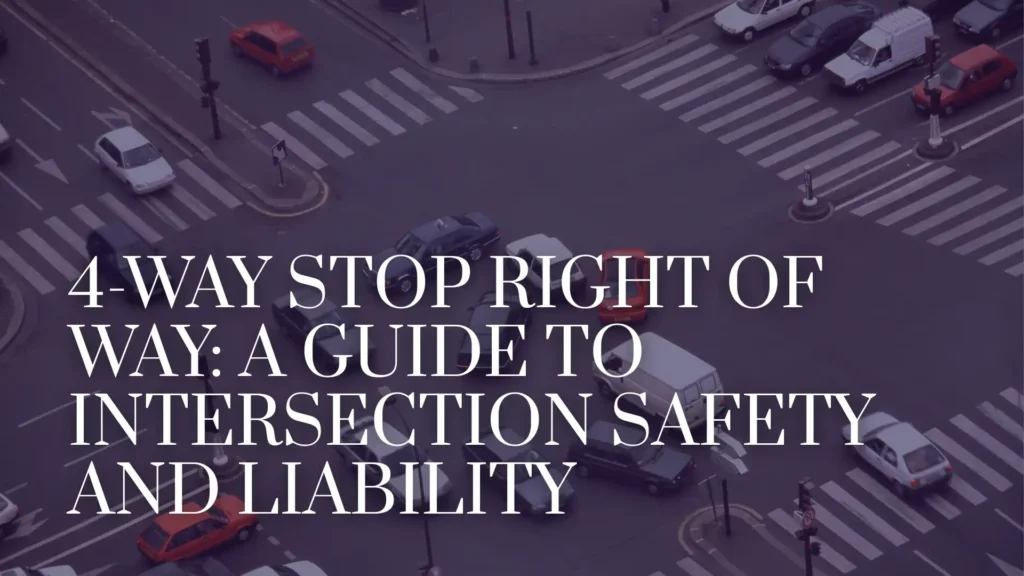
Navigating a busy intersection can be stressful, especially when multiple vehicles arrive at the same time. Understanding the rules for a 4-way stop right of way is not just about being a polite driver—it is a legal requirement in Colorado. When drivers fail to follow these rules, the result is often a side-impact or “T-bone” collision that can cause significant property damage and catastrophic injuries.
At Matlin Injury Law, our car accident lawyer team frequently represents victims who were injured because another driver ignored right-of-way laws. Knowing who has the legal right to proceed can help you stay safe on the road and protect your interests if an accident occurs.
The Fundamental Rules of a 4-Way Stop
In Colorado, right-of-way rules for intersections are codified under C.R.S. § 42-4-701. At an all-way stop, the “first to arrive” principle is the baseline, but several secondary rules apply when situations become more complex.
1. The First-to-Arrive Rule
The most basic rule is simple: the first vehicle to reach the intersection and come to a complete stop has the right of way to proceed first. Once that vehicle has cleared the intersection, the next vehicle to have arrived may proceed. Note that simply reaching the intersection isn’t enough; you must come to a full halt at the stop line or crosswalk to officially “arrive” in the eyes of the law.
2. The Yield-to-the-Right Rule (The Tie-Breaker)
If two or more vehicles arrive at the 4-way stop at approximately the same time, the driver on the left must yield the right of way to the driver on the right. This “yield to the right” rule is the primary tie-breaker designed to prevent confusion. If three cars arrive at once, the car furthest to the left should wait for the two cars to its right to proceed.
3. Straight Traffic vs. Turning Traffic
When two vehicles arrive simultaneously and are facing each other (head-to-head on opposite sides of the intersection), their movements depend on their intended direction:
- Both Straight: Both may proceed at the same time as their paths do not conflict.
- Straight vs. Turn: The driver intending to turn must yield to the driver going straight.
- Right Turn vs. Left Turn: If one driver is turning right and the opposing driver is turning left into the same road, the driver turning right has the right of way.
4. Pedestrian Right of Way
Regardless of which vehicle arrived first, all drivers have a duty of care to pedestrians. Under C.R.S. § 42-4-802, drivers must yield to pedestrians within a marked or unmarked crosswalk. In Colorado, a pedestrian is considered to be in the crosswalk even if there are no painted lines, provided they are crossing at an intersection.
Colorado’s “Safety Stop” for Bicyclists
It is a common point of confusion at Colorado intersections: does a bicycle have to stop? Since the passage of HB22-1028, Colorado law allows bicyclists (and users of low-speed conveyances like e-scooters) to treat stop signs as yield signs.
This means a cyclist may roll through a 4-way stop at a reasonable speed (up to 10 mph) if the intersection is clear and they already have the right of way. However, if other vehicles or pedestrians are present, the cyclist must follow standard 4-way stop right of way rules and yield accordingly.
Common Causes of Accidents at 4-Way Stops
Even with clear laws, “stop sign accidents” remain a leading cause of urban and suburban collisions. Ourteam often sees claims resulting from:
- Rolling Stops: Drivers who do not come to a complete stop (often called a “California stop”) may misjudge the arrival sequence or fail to see a vehicle that has already stopped.
- Distracted Driving: A driver looking at a phone or GPS may lose track of who arrived at the intersection first.
- The “Four-Car Stalemate”: When four cars arrive at once, Colorado’s “yield to the right” rule creates a loop where no one has clear priority. In these cases, communication, such as eye contact or a hand gesture, is necessary to safely break the tie.
- Obscured Signage: Foliage, vandalism, or poor weather can hide a stop sign, leading a driver to sail through an intersection they didn’t realize was controlled. This may lead to a pothole damage claim in Colorado style action against a municipality for negligent road maintenance.
Determining Liability in a Right-of-Way Accident
If you are involved in a crash at an intersection, the insurance company will look at several factors to determine how fault is determined in a car accident. Because these accidents often happen quickly, evidence beyond driver statements is vital.
Evidence We Use to Prove Fault:
- Police Reports: Officers will note if a citation was issued for failure to yield (C.R.S. § 42-4-701) or failure to stop (C.R.S. § 42-4-703).
- Point of Impact: If the side of your car was hit, it often indicates the other driver failed to yield. If you were hit from behind after stopping, it’s a clear case of following too closely.
- Witness Statements: Independent bystanders are often the most reliable source for determining who arrived at the stop sign first.
- Dash Cam and Traffic Cameras: Footage can provide an indisputable record of the arrival sequence and the speed of the vehicles involved.
Colorado’s Comparative Negligence Rule
Colorado follows a modified comparative negligence rule with a 50% bar. This means you can still recover damages if you were partially at fault (e.g., if you were traveling slightly over the speed limit), but your compensation will be reduced by your percentage of fault. If you are found to be 50% or more responsible, you are barred from recovery.
The True Cost of Intersection Collisions
Intersection accidents frequently result in “T-bone” or side-impact crashes. Because the sides of vehicles have less protection than the front or rear, the types of damages in personal injury car accident claims can be severe, including:
- Traumatic Brain Injuries (TBI): Caused by the head striking the side window or B-pillar.
- Spinal Injuries: The lateral force of a side impact can cause severe whiplash or herniated discs.
- Internal Organ Damage: Common in high-speed intersection collisions.
Beyond physical harm, victims face significant financial burdens. A serious accident can lead to tens of thousands of dollars in medical bills and months of lost wages.
Steps to Take After an Intersection Accident
- Safety and 911: Ensure everyone is safe and call for emergency services.
- Report the Incident: Always get a police report. In Colorado, a report is required for any crash resulting in injury or property damage.
- Document the Intersection: Take photos of the stop signs, any obscured views, and the final positions of the vehicles.
- Exchange Info: Get insurance and contact details from the other driver, but do not admit fault or apologize.
- Seek Medical Care: Even if you feel fine, visit a doctor. Adrenaline often masks symptoms of serious internal trauma.
- Speak with a Lawyer: Before giving a recorded statement to an insurance adjuster, consult a professional to protect your rights.
Frequently Asked Questions
What if I arrived at the same time as someone else and they waved me through?
If another driver waves you through, you can proceed, but do so with extreme caution. Legally, the right of way is still governed by statute. If a collision occurs, the other driver might deny they waved you on, making it a “your word against theirs” situation.
Is a “rolling stop” a violation of the right of way?
Yes. To establish right of way at a 4-way stop, you must come to a complete and total stop. If you roll through, you haven’t legally “arrived” at the stop, and a driver who came to a full stop after you may actually have the legal right of way.
How does right of way work for emergency vehicles?
Emergency vehicles with active lights and sirens always have the right of way. All other drivers at the 4-way stop must remain stopped until the emergency vehicle has cleared the intersection, regardless of the arrival order.
What if the traffic lights are out at an intersection?
When a traffic signal is dark or malfunctioning, Colorado law treats the intersection as a 4-way stop. All drivers must stop and follow the standard 4-way stop right of way rules.
Can I recover costs for a rental car?
If the other driver is at fault, their insurance should cover the cost of a rental vehicle. Learn who pays for a rental car after a Colorado accident so you can protect your transportation.
Contact Matlin Injury Law Today
Understanding the 4-way stop right of way can prevent accidents, but it can’t always stop a negligent driver from causing a crash. If you have been injured in an intersection accident, you shouldn’t have to navigate the car accident claim process alone.
Matlin Injury Law is dedicated to protecting the rights of injured motorists throughout Colorado. We help you gather evidence, negotiate with insurance companies, and fight for the full compensation you deserve.
Call our team today at (303) 487-8911 or contact us online for a free, no-obligation consultation.